
Welcome to the largest national park in the Canadian Rockies! Its size can be a bit overwhelming at times, but Robin and Arlene Karpan have created the ideal Jasper National Park itinerary to help you make the most of your visit, especially if you’re aiming for autumn.

Jasper is the largest of Canada’s Rocky Mountain national parks and our personal favourite. It has everything from magnificent soaring peaks to the most accessible glaciers in the Rockies, waterfalls galore, and outstanding wildlife viewing. Fabulous hiking is an especially large draw where there’s a multitude of choices from ambitious backcountry treks to leisurely strolls.
While any time of year in Jasper is great, fall is by far our top season to visit. Summertime crowds are gone, the weather is still pleasant for the most part, and fall colours add extra sparkle to the already breathtaking landscape. Then there’s the wildlife. You won’t find a better place in Canada to see the fascinating fall elk rut.
About Jasper National Park
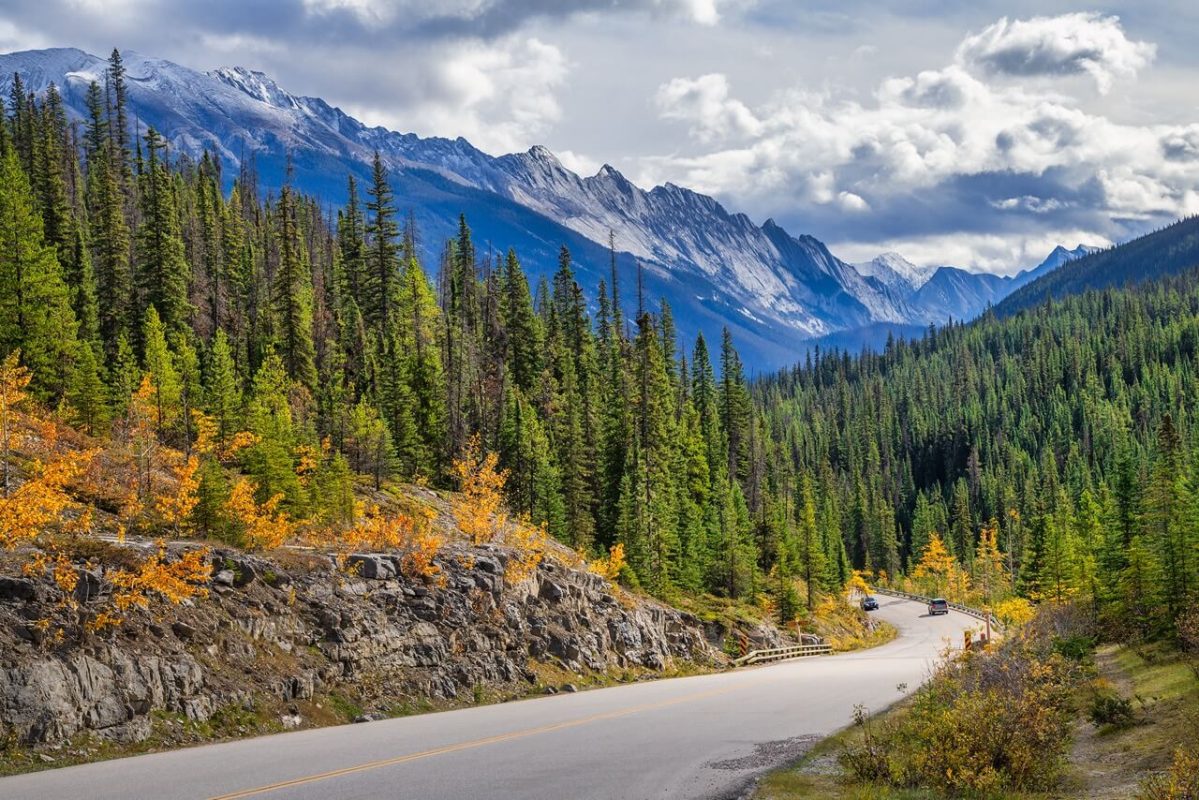
Jasper National Park is a sprawling natural marvel, covering over 11,000 square kilometres. It was initially established as Jasper Forest Park back in 1907, renamed as a national park in 1930, and then achieved the coveted designation as a UNESCO world heritage site in 1984.
It’s located about 4 hours southwest of Edmonton, the capital city of Alberta, and 3.5 or so hours northwest of Calgary. It’s not all that far north from the town of Banff, Alberta or the world-famousBanff National Park, by the way, if you were aiming to see multiple national parks during your visit to the province. If you time your visit right, you can even combine your travels with the Banff SnowDays festival.
A final note before we get into the specifics of how to explore this national park — for those enchanted by the night sky, Jasper holds a special allure. As a Dark Sky Preserve, it also offers unparalleled opportunities for stargazing and catching the ethereal dance of the northern lights.
*Please note that this article may contain affiliate links. Simply put, that means that we may get a small commission from some of our recommendations at absolutely zero extra cost to you.
What Should You Do at Jasper National Park?
Start at the Top with the Jasper SkyTram
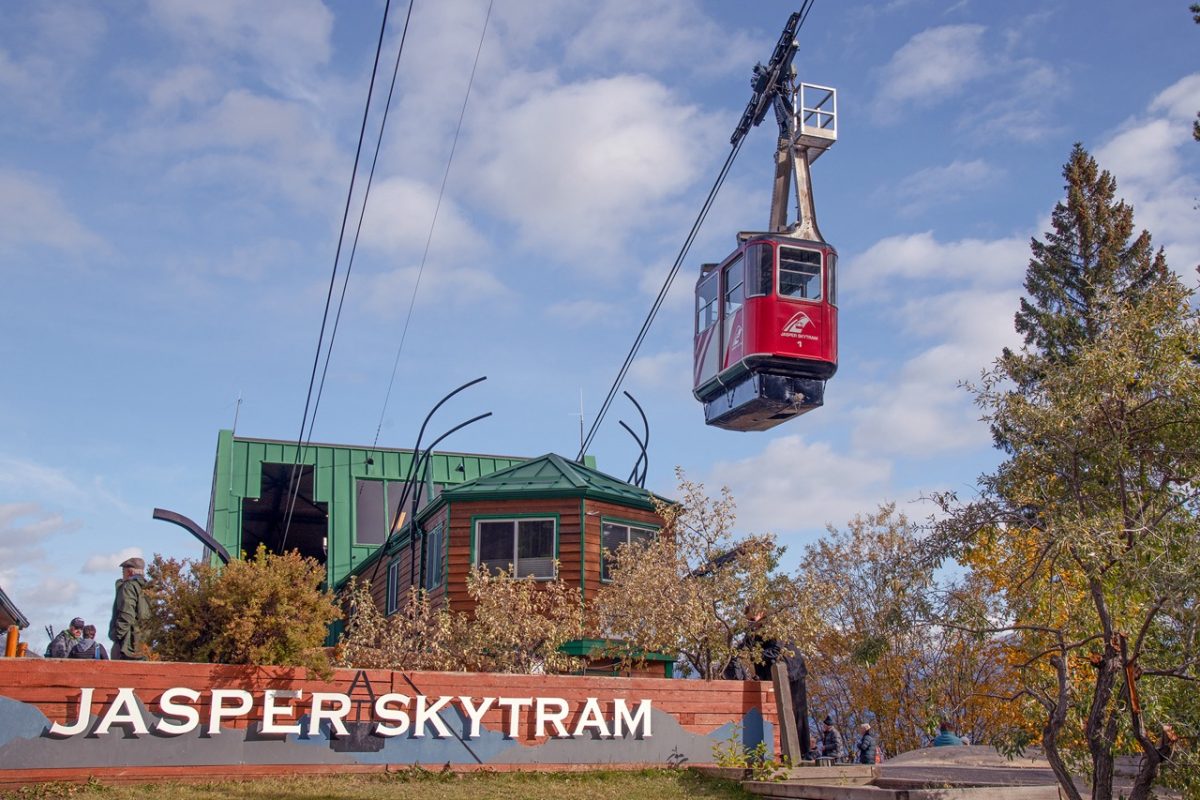
For an overview of the lay of the land near Jasper townsite, start by taking the Jasper SkyTram. In a cabin accommodating 20 or so passengers, you ascend the cable lift up Whistlers Mountain to just shy of its summit at 2,463 metres. Step out at the top, and you’ll be in the midst of a high alpine tundra with sweeping views.
From the Upper Station, a trail of only 1.4 kilometres, but with a 200-metre altitude gain, leads to the summit with a spectacular 360-degree vista.
Take some of the side trails along the way to even more places to look over the townsite, the Athabasca River Valley, and the wilderness beyond. If you’re partial to dining with a view, the Summit Café in the Upper Station is hard to beat.
Drive to Patricia and Pyramid Lakes
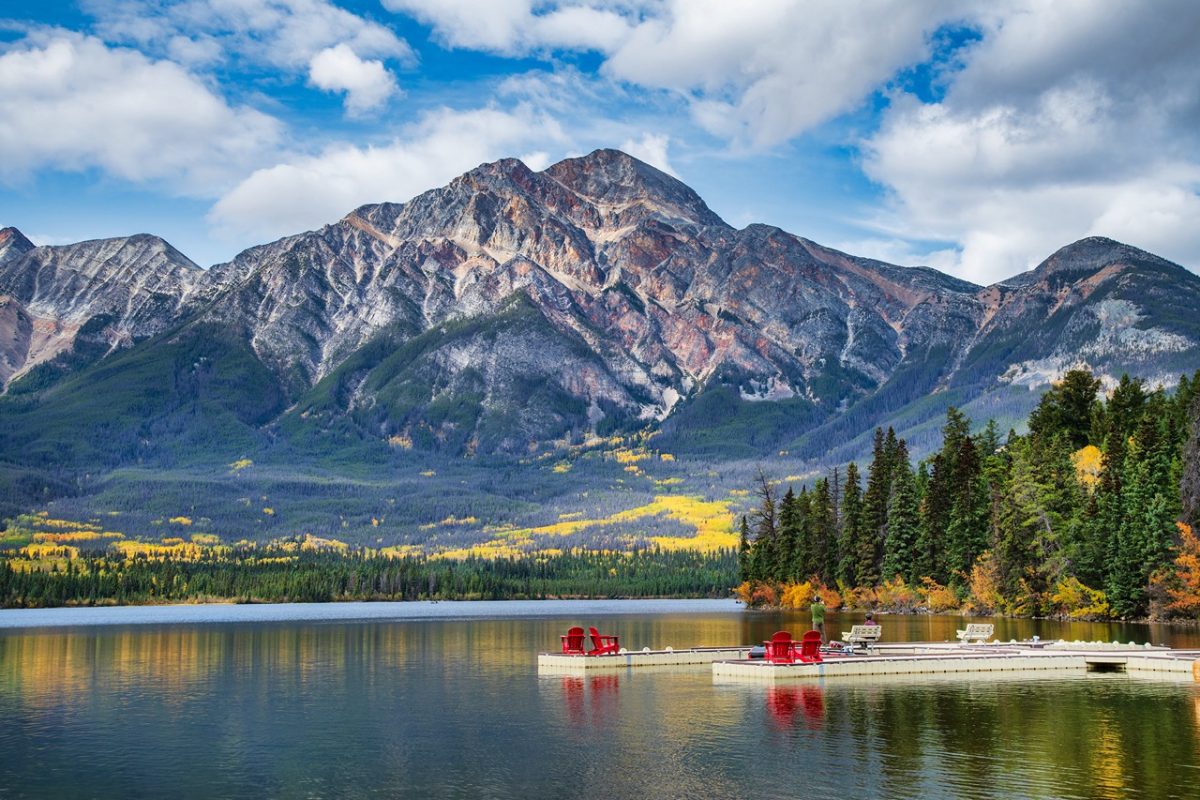
This is our go-to early morning drive for photography. These two small lakes, with imposing reddish-tinged Pyramid Mountain as a backdrop, are only a few minutes’ drive from Jasper townsite.
The protected lakes tend to be fairly calm in the early morning, reflecting the surrounding peaks and the fall colours from deciduous trees lining the lakeshores. The lakes are especially popular for canoeing, kayaking, and paddleboarding.
Check Out Maligne Lake Road
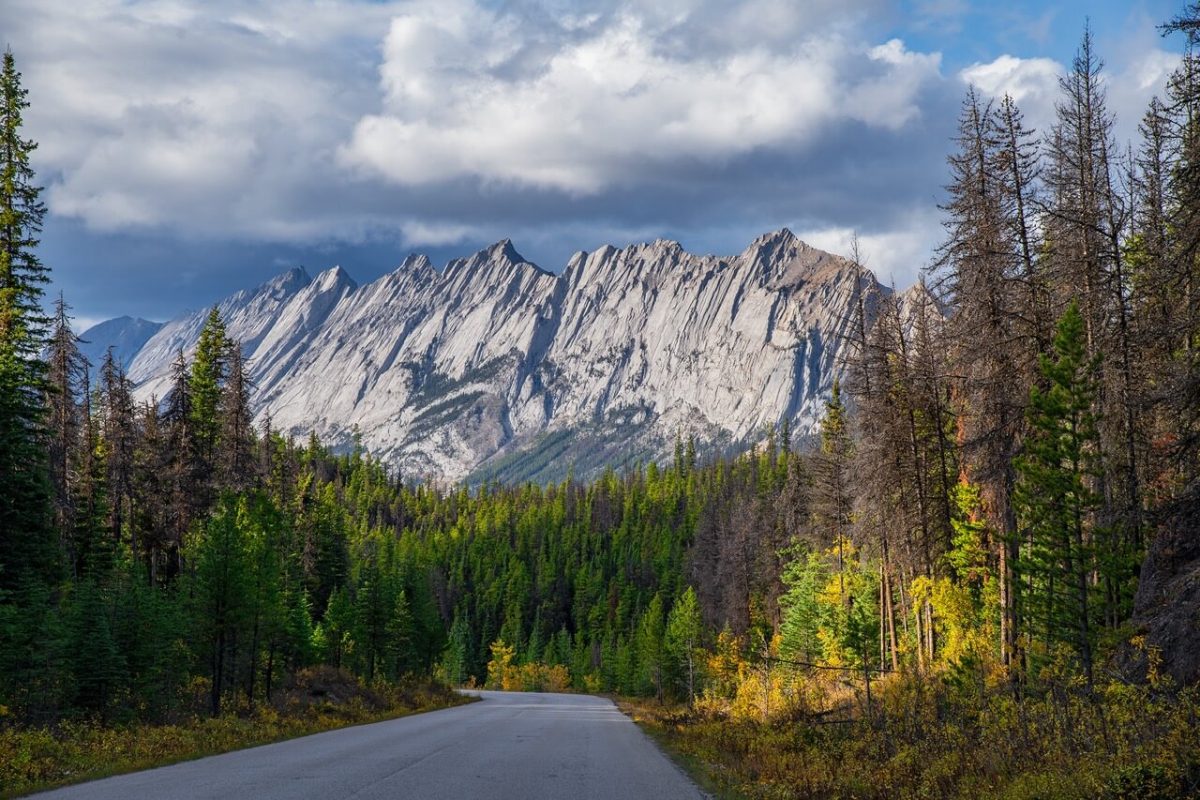
This 50-kilometre route from Jasper townsite to Maligne Lake is our favourite Jasper drive. One of the first highlights is Maligne Canyon where churning water has carved a narrow canyon to a depth of 50 metres in places – the deepest canyon in the Rockies. An interpretive trail lines the route, complete with six bridges across the gorge, so you can decide on how short or long a hike you want.
Medicine Lake, about halfway along the road, is also known as the disappearing lake. Part of the Maligne River, it looks like a normal alpine lake much of the year. Come fall, a lot of the water disappears through sinkholes in the bottom, flows underground, and then resurfaces near Maligne Canyon.
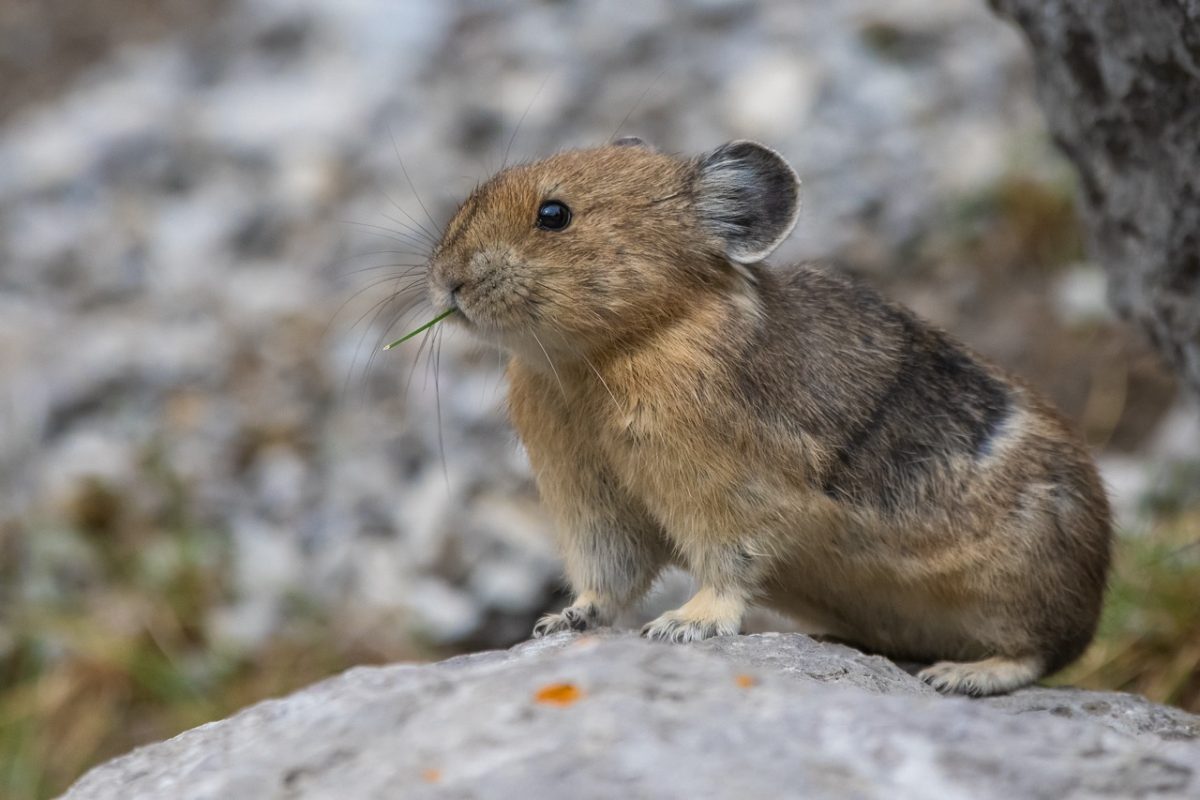
Maligne Lake Road is considered among the top areas of the park to find wildlife. Sure enough, during our latest visit we came across bears, elk, and had fairly close encounters with moose. While wildlife viewing can never be guaranteed, finding pikas at Medicine Lake is as close as we can get to a sure thing.
These small mountain-dwelling critters are members of the rabbit family but look more like gigantic mice on steroids. We have never failed to find them at the Medicine Lake Lookout. Watch for them scurrying among the jumble of rocks near the staircase that descends from the parking area to the lakeshore.
Spend Some Time at Maligne Lake and Spirit Island
The road ends at Maligne Lake. At 22 kilometres long, and lined by snow-capped peaks and glaciers, it’s the largest natural lake in the Canadian Rockies.
A few hiking trails start here, from short loops lining the lake to longer backcountry excursions. The most popular activity is taking the Maligne Lake Cruise, named the “Best Boat Cruise in Canada” by Reader’s Digest. The tour travels 14 kilometres down the lake to a drop-dead gorgeous canyon, with a stop at famous Spirit Island.
During the heyday of film photography, capturing that perfect scene or event was called “a Kodak Moment,” and Spirit Island had a lot to do with popularizing the term. To market colour film, the Eastman Kodak company used a photo of the then little-known Spirit Island as part of a large display in New York’s Grand Central Terminal, introducing this special spot to millions of people. Today, it has become one of the most iconic and photographed subjects in the Rockies.
An extremely attractive option is to canoe or kayak down Maligne Lake to Spirit Island. However, you have to plan quite far ahead because the small number of backcountry campsites nearby get booked well in advance.
Set Eyes on Athabasca Falls and Mount Edith Cavell
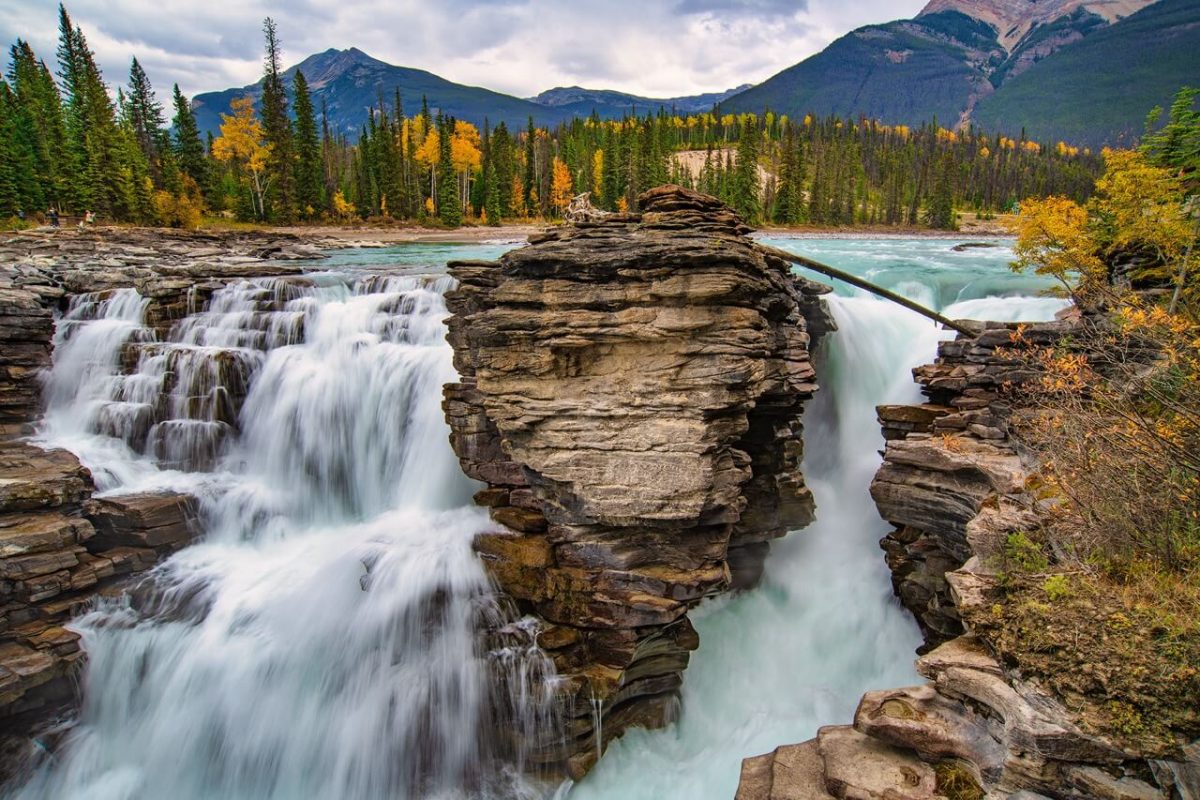
Athabasca Falls is 30 kilometres south of Jasper townsite along the Icefields Parkway (Highway 93). Here, the Athabasca River plunges 23 metres. While not particularly high by Rocky Mountain standards, it is one of the most powerful falls as this huge, wide river constricts into a narrow canyon. The falls are easily accessible, with platforms offering stunning views in every direction.
A great day trip to Athabasca Falls is to travel one way along Highway 93 and come back on Highway 93A which runs along the opposite side of the Athabasca River. Along 93A you can take a side trip to Mount Edith Cavell by way of narrow, winding Cavell Road with plenty of tight switchbacks as it climbs high into the mountains.
The road ends at Mount Edith Cavell, named for the British nurse who helped Allied soldiers escape from the Germans in World War I. Two trails, one about 7 kilometres long and the other only 1.6 kilometres, offer breathtaking views. The short Path of the Glacier Trail leads to a viewpoint overlooking Cavell Pond, where chunks of ice have fallen into the water from the glaciers just above.
Head South to the Columbia Icefield
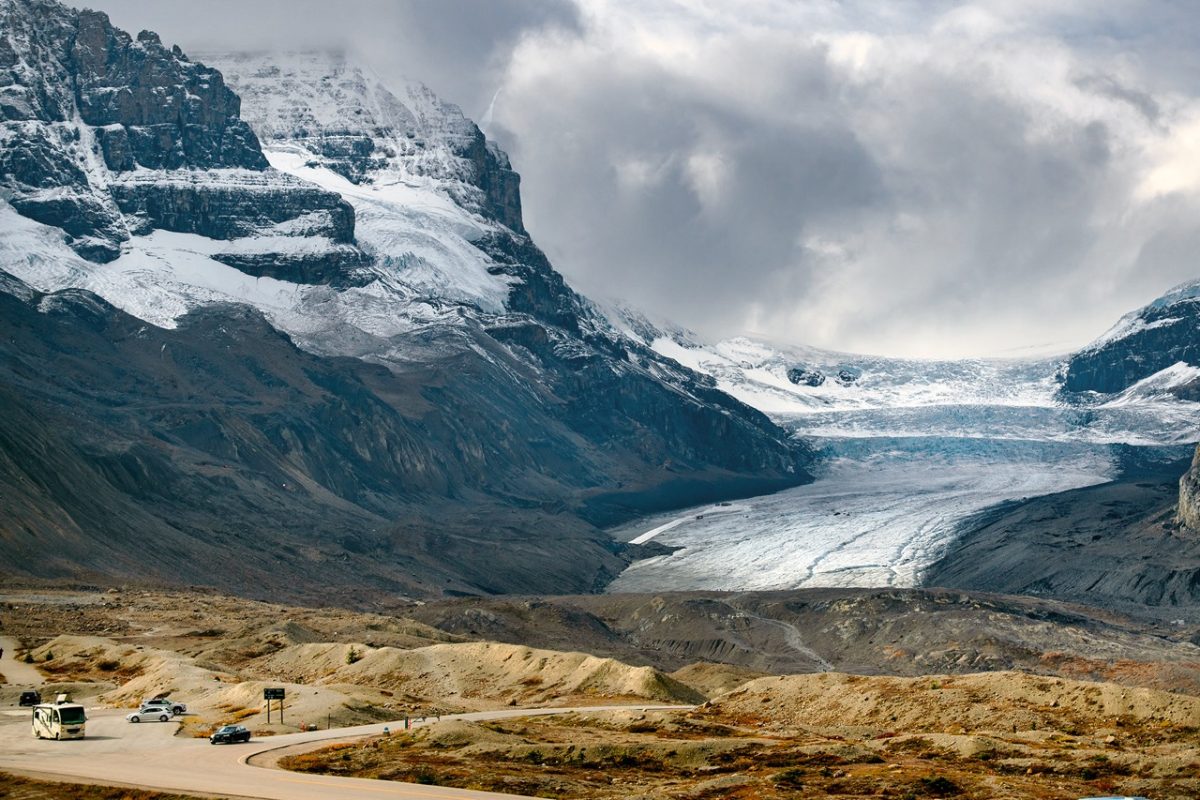
About 100 kilometres south of Jasper townsite, the Columbia Icefield marks the southern end of Jasper National Park. Just past here, the Icefields Parkway continues into Banff National Park.
Covering some 230 square kilometres, it’s the largest icefield in the Canadian Rockies. Different glaciers extend from the icefield, the most famous being the Athabasca Glacier, which is close to the highway, and the Columbia Icefield Centre, the huge visitor centre with some of the most awesome views anywhere.
The short Toe of the Glacier Trail is an easy walk that gets you close to the glacier. The most revealing part of the walk is the series of signs marking how far the glacier extended in different years. It’s remarkable how far the glacier has retreated in a relatively short time.
To really get up close and personal, you can venture onto the glacier itself by taking a tour on the unique Ice Explorer all-terrain vehicles. Built specifically for this purpose, they travel up the steep, rocky moraine, then onto the ice. Seeing the glacier from a distance is one thing, but being on top is a surreal experience.

Another unique experience is the Columbia Icefield Skywalk, a cliff-edge walkway that extends onto a glass-floored observation platform where you look down to the Sunwapta Valley 280 metres below. Taking the first step onto the platform felt rather eerie and dizzying as we peered straight down, literally under our feet, to the river and waterfalls way below.
Just getting to the Columbia Icefield is half the fun, with non-stop stunning landscapes along the drive from Jasper. Our favourite stop, about halfway along, is Sunwapta Falls. The Sunwapta River flows around a small treed island and then plunges into a narrow steep-walled canyon that it carved into the limestone. This is a popular spot, almost next to the parking lot. The crowds thin as we take the easy hike of less than 3 kilometres return to the lower falls which are equally impressive.
Appreciate the Fall Elk Rut
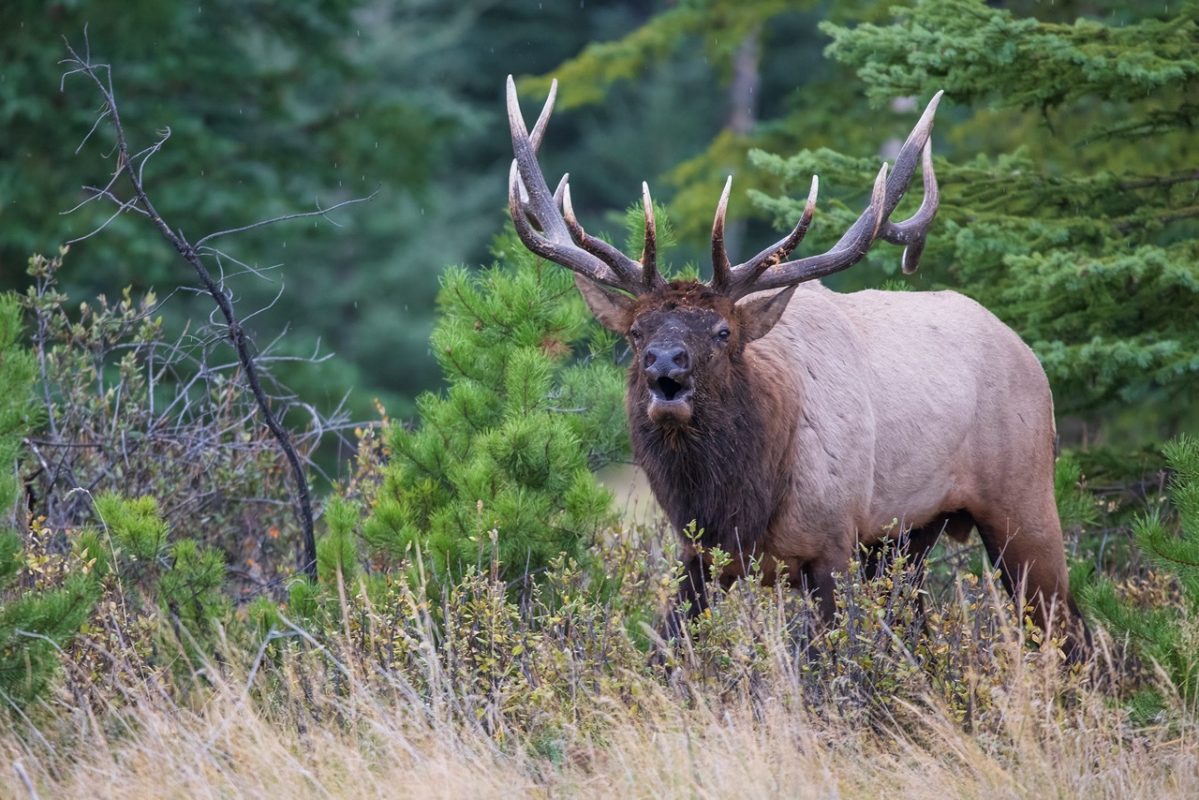
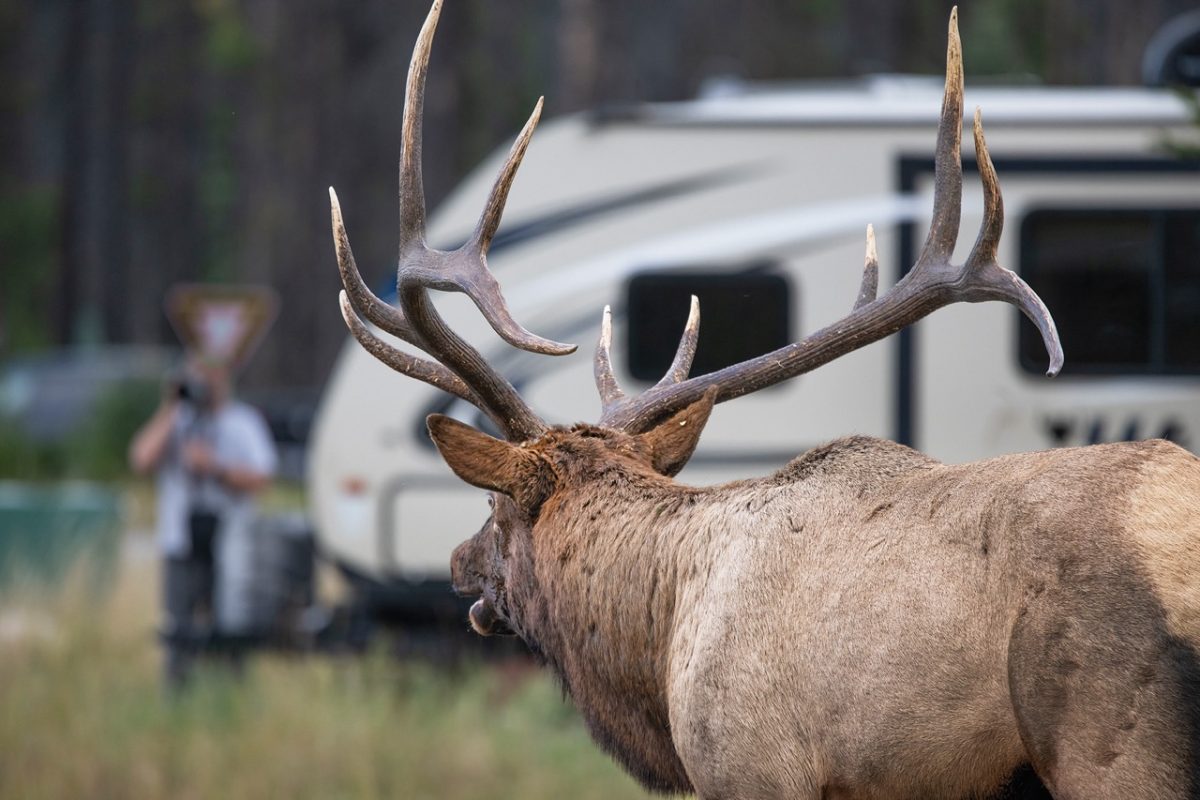
Jasper abounds with wildlife, including the usual mountain suspects such as bears, moose, deer, mountain goats, bighorn sheep, and more. Elk stand out during the fall rut, making this reason enough to go to Jasper. Indeed, many wildlife photographers travel here specifically for the elk.
It’s quite a show as the guys try to impress the gals with loud bugling, challenging other bulls for dominance, and generally making a big fuss. Peeing on yourself is also considered good form in the elk courting world. Sometimes the competition between bulls leads to clashes where they lock horns, both figuratively and literally.
These flamboyant mating rituals occur everywhere that elk live. However, Jasper stands out because of the easy access to see the action. While elk could be anywhere and wander around a lot, they usually hang out close to the townsite, along the Yellowhead Highway, and around Whistlers Campground.
Elk can be quite dangerous at this time of year, and there are signs everywhere warning visitors not to get close. We can often photograph the goings-on safely from our vehicles on the side of the road without getting close on foot.
We generally hear the elk before we see them. The piercing, high-pitched, bugling call of a bull elk is among the most thrilling sounds of the wilderness. The most rewarding elk sightings we had on our recent trip were in Whistlers Campground. They were there almost constantly, and we heard bugling throughout the night.
At one point three bulls converged in the same area of the campground and tensions remained high with lots of posturing and chasing each other. Campers had a ringside seat for all the action.
Where Should You Stay When Visiting This National Park in Alberta?
Accommodation options run the gamut from lodges to hotels, motels, inns, hostels, cabins, and campgrounds. If you’re ready to book, you can see what’s available here.
Parks Canada is the best source for campground information and bookings. Whistlers Campground is the largest, with the added benefit of being a hotspot for elk activity. There are other campgrounds throughout the park, but when visiting in fall, be sure to monitor the Parks Canada website to see when the various campgrounds close for the season.
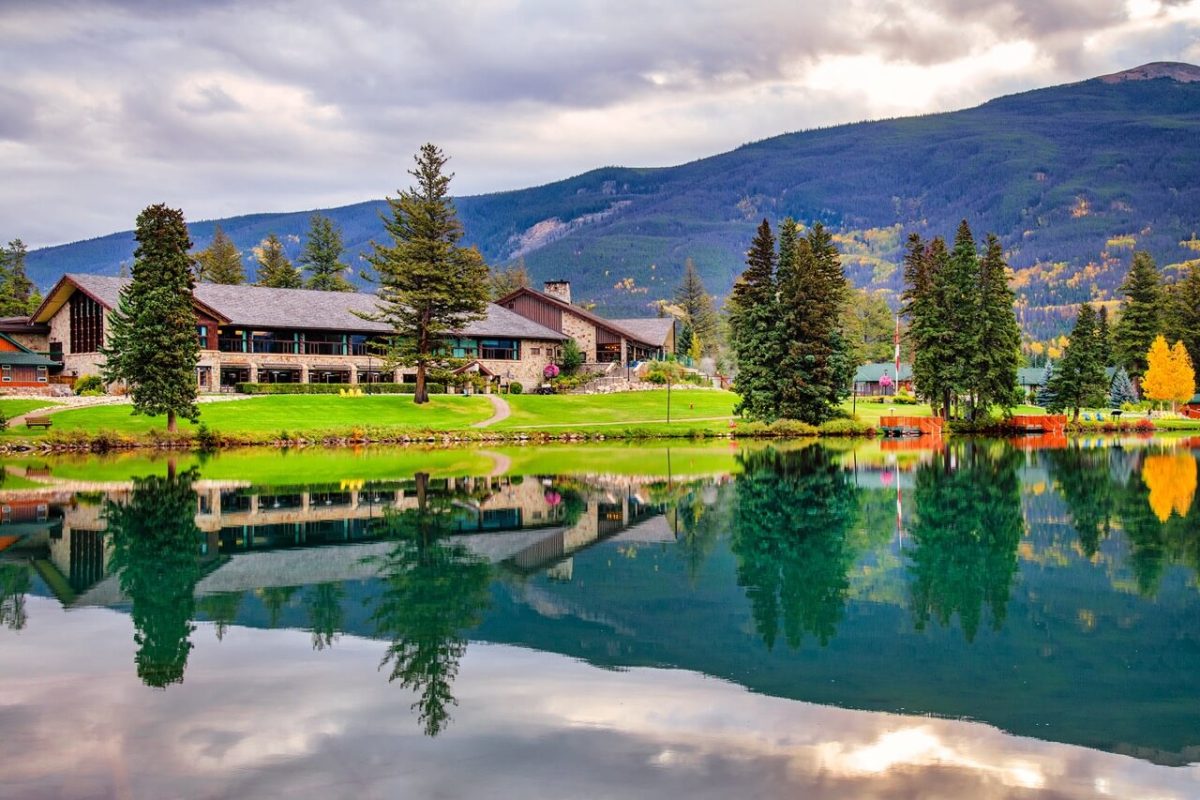

The Fairmont Jasper Park Lodge is an accommodation option in a class by itself. Bordering the Athabasca River and Lac Beauvert and encompassing over 700 acres, the setting is nothing short of stunning. It’s an upscale luxury resort but one with a difference—it’s a place where guests are much more likely to be sporting hiking boots than high heels.
Spaciousness is a defining feature, with accommodation in several buildings throughout the grounds. Even when the lodge is full, as it was during our stay, it doesn’t feel crowded since guests are spread over a large area.
If you’re up for a splurge, check out the lodge’s chalet-style Signature Cabins, ranging from one to eight-bedroom units. Some come with massive stone fireplaces, full kitchens, pool tables, hot tubs, games rooms, and outdoor firepits. One even has its own putting green. The guest list for these cabins has included corporate moguls, movie stars, and royalty. Some cabins even come with butler service.
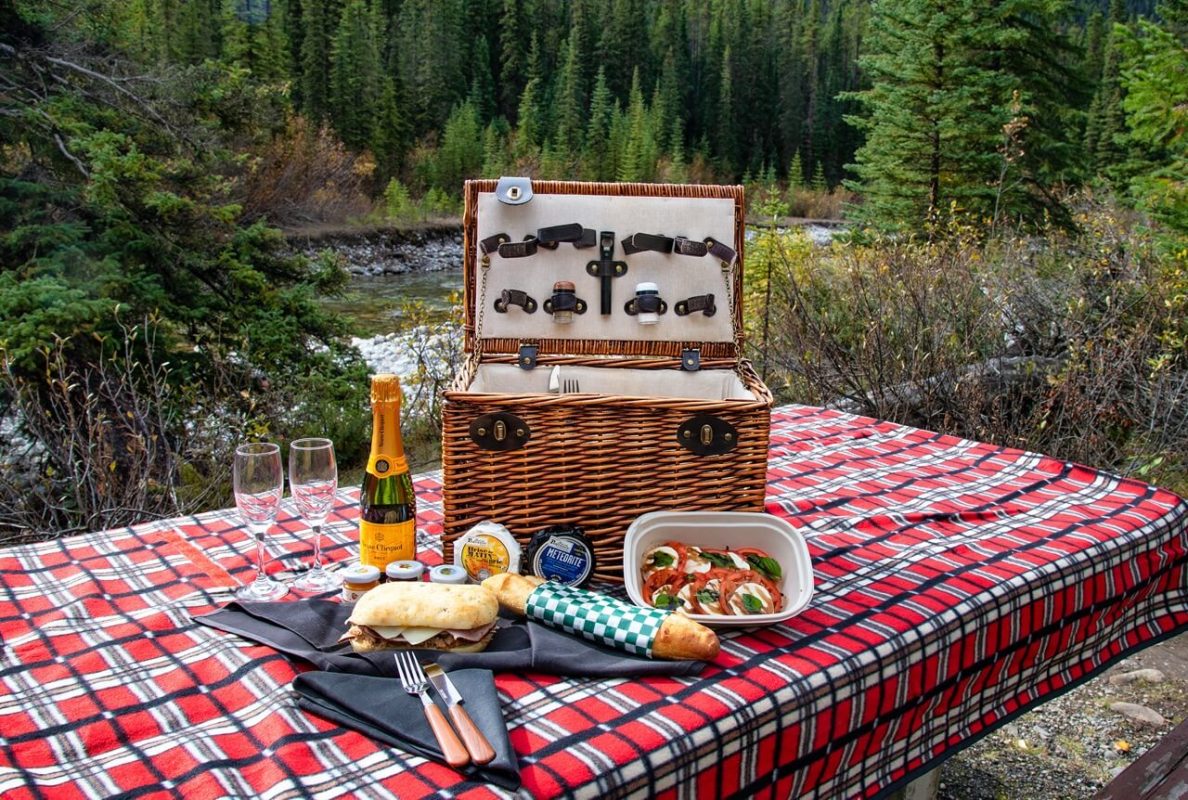
Perhaps you think that butler service might be a bit over the top, but if you still want a bit of pampering, a nice touch is the lodge’s Adventure-Ready Picnics to go. A selection of gourmet foods, complete with champagne, come packed in a classic Instagram-ready wicker basket. You can then enjoy lunch while looking over an iconic Jasper scene, champagne glass in hand.
No matter where you stay or the kinds of activities you prefer, Jasper is one of those special places that seems to have it all.
Are You Ready To Experience The Wonders Of Jasper National Park?
Jasper National Park is one of the most beautiful places in the world. Don’t take my word for it, though; experience this Jasper National Park itinerary for yourself, and you’ll know firsthand.
Do you have a favourite attraction or restaurant in Canada? Head over to the We Explore Canada Facebook Community and join the conversation! You’ll find an amazing group of people in Canada who are passionate about travel and love to share their local secrets.
You May Also Like To Read:

